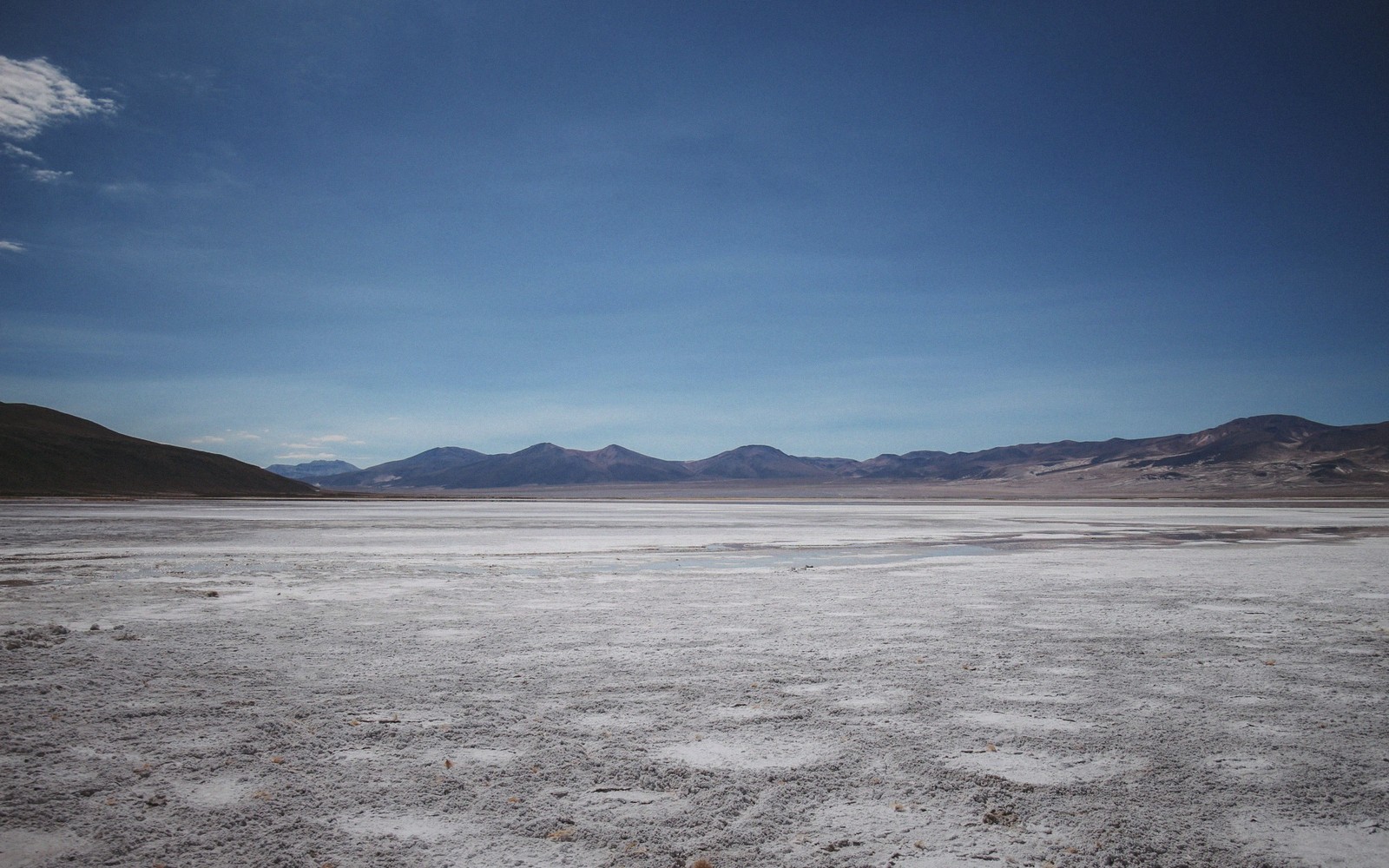
The deposits are extraordinary. The economics are complicated. The politics are combustible.
The Geology Is Not the Geography of Wealth
Beneath the salt flats of the Puna plateau — the high Andean tableland shared by Bolivia, Argentina and Chile — lies the largest concentration of lithium on earth. The Salar de Atacama in Chile, the Salar de Uyuni in Bolivia, and a constellation of Argentine salares stretching through Jujuy, Salta and Catamarca together account for well over half the world's identified lithium reserves. In an era when battery technology governs the future of electric vehicles, grid storage and consumer electronics, that geological fact carries extraordinary geopolitical weight.
But the map of reserves and the map of who profits are strikingly different things, and understanding the gap between them is the real story of the Lithium Triangle.
Chile is the region's established producer, consistently ranking among the top two or three lithium-exporting nations globally. SQM and Albemarle, operating under concessions in the Atacama, have extracted lithium for decades. President Gabriel Boric pushed through a national lithium strategy in 2023 that would require the state — through CODELCO, Chile's copper giant — to hold majority stakes in future projects. The policy aims to capture more value domestically, but implementation timelines are long and the existing concessions still run on earlier terms. Chile exports predominantly as lithium carbonate or hydroxide, not as processed battery components; it remains, in the value chain, a raw-material supplier.
Argentina presents a different case. Under its decentralised federal mining law, provinces negotiate directly with investors, which has made it a favourite of private capital — mining companies from the United States, South Korea, China and Australia have acquired positions across its salares. The country is in the midst of a genuine production ramp-up that should push it significantly up global rankings over the coming years. Yet Argentina's macroeconomic instability — chronic inflation, serial currency crises, and a history of policy reversals — raises the cost of capital and complicates long-term planning. Javier Milei's government has signalled deregulatory enthusiasm for the sector, but whether that produces sustained investment or a short extraction cycle remains an open question.
Bolivia's Paradox
Bolivia is where the lithium story becomes most politically charged. The Salar de Uyuni is arguably the single largest lithium deposit on the planet, yet Bolivia produces only a fraction of what Chile or Argentina extracts. The reasons are largely political, though geology plays a part.
Since at least the presidency of Evo Morales, Bolivia has insisted on industrialising its lithium domestically — producing battery-grade material, and eventually batteries themselves, rather than shipping raw brine to be processed elsewhere. It is a coherent vision of development: break the extractive cycle, capture the value-added stages, build technical capacity at home. The strategy has also been stubbornly difficult to execute. The state entity Yacimientos de Litio Bolivianos has partnered with foreign firms over the years, including a notable agreement with a Chinese consortium, but output has repeatedly disappointed against official projections. Salt-flat brines in the Uyuni are higher in magnesium than those in Chile, which raises processing costs and complicates yields.
The harder question is whether any single country can force its way into the midstream and downstream of a global battery supply chain that China largely controls. Chinese firms dominate cathode production, cell manufacturing and much of the refining capacity that sits between a salt-flat brine and a finished battery. Without access to those capabilities — or the willingness to transfer them — even the richest lithium deposit stays at the bottom of the value chain.
Numbers That Cut Both Ways
For communities in the Atacama, Puna and Altiplano, the arithmetic of lithium is not primarily about global energy transition narratives. Lithium extraction is water-intensive in some of the world's driest ecosystems. Indigenous communities — Atacameños, Quechua and Aymara-speaking peoples — have raised sustained objections about consultation rights, water rights and the distribution of royalties. Courts in Chile and Argentina have, at different moments, ordered project suspensions or required expanded consultation processes, and those legal contests are ongoing.
The revenue picture is also uneven within countries. Royalty and tax regimes vary considerably, and the commodity-price volatility that sent lithium prices soaring after 2020 and then crashing again by 2023 has shown how exposed export-dependent economies remain to cycles they cannot control.
The triangle holds a genuinely world-historical resource. What it has not yet produced is a model for translating that resource into durable, broadly shared prosperity. That gap — between the geological luck and the developmental outcome — is precisely what makes lithium's long game in the Southern Cone worth watching long past the current price cycle.