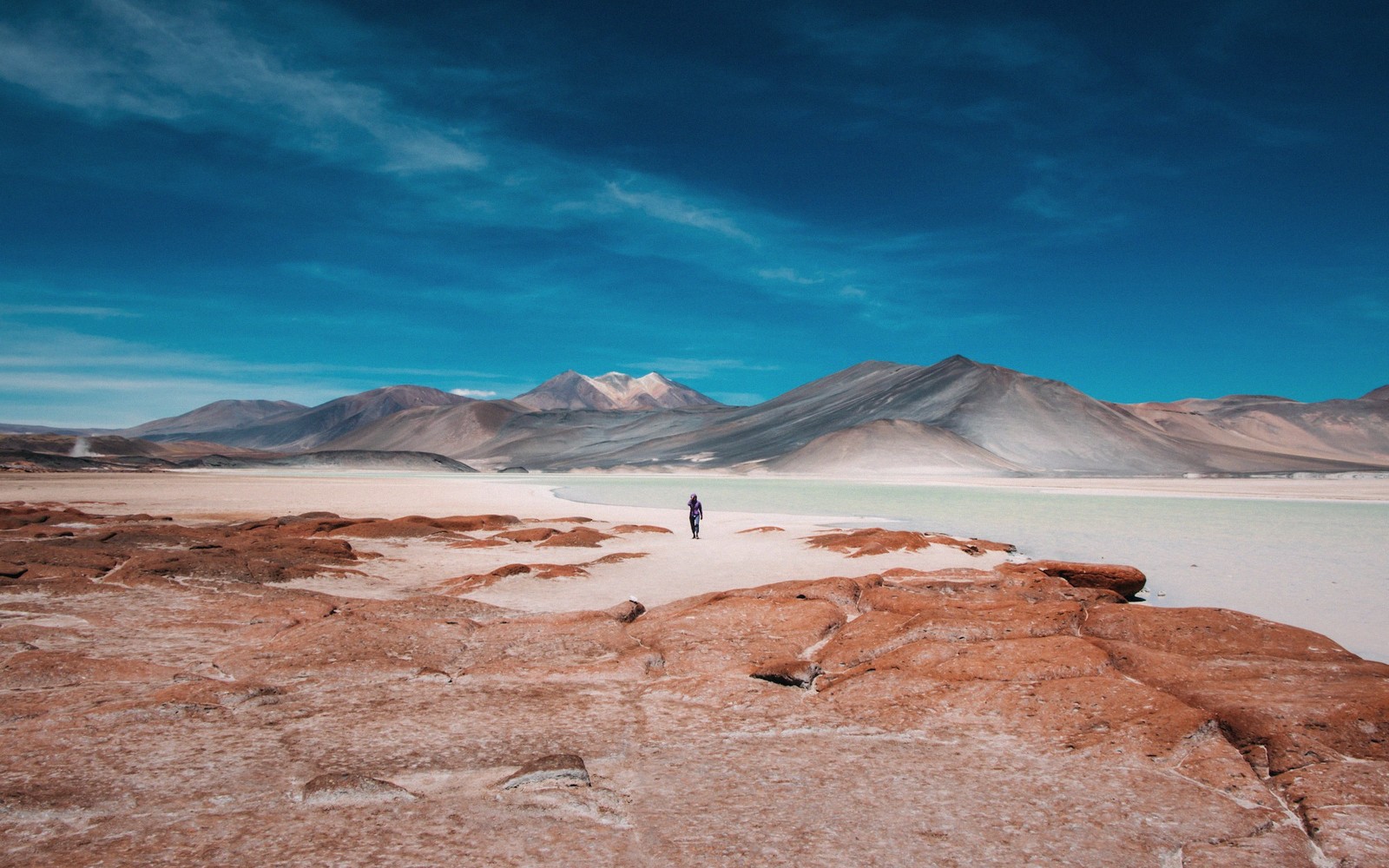
Beneath the salt flats of the Atacama, the Salar de Uyuni and the Puna de Atacama, there lies enough lithium to rewire the world's energy economy. The brine is ancient, the deposits are immense, and the demand from electric-vehicle manufacturers and battery producers is climbing with an urgency that borders on desperation. For Bolivia, Chile and Argentina — the three countries that together sit atop well over half the world's identified lithium reserves — this ought to be a moment of historic leverage. Whether they can actually use it is the more complicated question.
The Lithium Triangle is a phrase that entered the energy lexicon relatively recently, but the geology it describes has been there for millions of years. Tectonic forces and evaporation concentrated lithium-rich brine in the high-altitude salt flats of the central Andes, creating a natural endowment of extraordinary scale. What differs starkly between the three countries is not the resource but the political architecture built — or not yet built — around extracting it.
Three Countries, Three Bets
Chile has historically been the region's leading producer, extracting lithium from the Atacama for decades through two main operators: the Chilean SQM and the US-based Albemarle. For most of that time, Chile watched royalties flow out rather than value being built at home, a familiar post-colonial dynamic that its copper industry knows well. Then, in April 2023, President Gabriel Boric announced a national lithium strategy that would see the state take a majority stake in future lithium contracts and elevate the Corporación Nacional del Cobre — better known as Codelco, Chile's state copper giant — as the country's lithium anchor institution. The state, in other words, would no longer just collect a fee at the gate; it would want a seat at the table.
Boric's announcement set off a predictable argument. The mining industry warned of regulatory uncertainty, while the left read the policy as too timid and the right as too interventionist — the familiar chorus that greets any attempt to renegotiate the terms of natural-resource extraction in Latin America. What the policy did not do, at least in its initial form, was nationalize existing contracts, a line Boric explicitly declined to cross. SQM and Albemarle could finish out their existing agreements; new projects would face a different logic. Codelco, meanwhile, has been moving to structure the partnerships that would govern lithium extraction in the Atacama once current concessions expire or are renegotiated.
Argentina presents a different landscape altogether — in every sense of the word. Rather than one dominant salt flat under federal jurisdiction, Argentina has dozens of lithium projects scattered across the provinces of Jujuy, Salta and Catamarca, and under Argentine constitutional law, the provinces own their subsoil resources. This means that national industrial policy, if it exists at all, must be pieced together through provincial deals rather than decreed from Buenos Aires. The result is a patchwork: some provinces moving aggressively to attract foreign investment, others pressing for greater local content requirements, and a federal government — whichever one is in power — with limited structural leverage over the process.
This decentralization has made Argentina attractive to the kind of mining capital that prefers speed and flexibility over state partnership. Under Javier Milei, whose administration arrived in late 2023 committed to deregulation and open capital markets, the federal posture has shifted sharply toward attracting foreign direct investment with minimal friction. The RIGI — the large-investment incentive regime that Milei's government pushed through Congress in 2024 — offers substantial tax and customs incentives to qualifying projects, including lithium mining. Critics argue it concedes too much sovereign ground in exchange for too little guaranteed return; supporters counter that without competitive incentives, capital simply goes elsewhere.
Bolivia is the outlier in ways that are structural, not incidental. The Salar de Uyuni holds what may be the world's largest single lithium deposit, yet Bolivia has historically extracted and exported almost none of it. The reason is partly geological — Bolivian brine has a higher magnesium content that complicates processing — and partly political. Under Evo Morales, Bolivia declared its intention to industrialize lithium entirely on its own terms, rejecting the enclave-extraction model it saw in its neighbors. Yacimientos de Litio Bolivianos, the state company created to manage the resource, became both the vehicle and the symbol of that ambition. The problem is that ambition without capital, technology and stable governance tends to calcify into aspiration.
Bolivia's lithium program has produced years of announcements — partnerships floated, contracts signed, pilot plants opened — without the volumes of production that would make it a meaningful player in the global market. The political turbulence of recent years, including the contested 2019 election and its aftermath, the return and subsequent fracture of the MAS political movement, and the chronic tension between Morales and his former ally Luis Arce, has made long-term industrial planning extremely difficult. What Bolivia has is leverage it cannot yet convert.
The Value Chain Problem
All three countries face a version of the same underlying challenge: the distance between mining a raw material and manufacturing a finished battery product is enormous, and right now, nearly all the value added happens outside Latin America — predominantly in China, South Korea and Japan. The integrated supply chains, the processing technology, the battery-cell manufacturing know-how: these are clustered in East Asia after decades of deliberate industrial investment. Competing with that means building not just mines but processing facilities, technical capacity and export markets — and doing it fast enough to matter in an energy transition that is accelerating whether or not the Southern Cone is ready.
Chile has made the most explicit attempt to frame this as a national industrial project, with Boric's lithium strategy including language about downstream processing and technology transfer. Argentina has companies at various stages of development, and some — particularly in Jujuy and Salta — have moved beyond exploration toward construction. But "made in Latin America" lithium carbonate, let alone lithium-ion cells, remains far more aspiration than reality.
The environmental and social dimensions add another layer of complexity. Lithium extraction in the high-altitude salares is water-intensive in regions where water is desperately scarce and where Indigenous communities — Atacameño, Quechua, Aymara peoples — have lived and herded and farmed for centuries. The tension between extraction and Indigenous rights has produced protests, legal challenges and, in some cases, genuine consultation processes that slowed or reshaped projects. International buyers, particularly European ones operating under increasingly rigorous due-diligence requirements, are paying more attention to supply-chain ethics. That creates pressure from above just as environmental movements create pressure from below — and mining companies are navigating both.
- Decades prior to 2023SQM and Albemarle extract Chilean lithium under concessions, limited state participation
- April 2023Boric announces Chilean national lithium strategy; Codelco designated anchor institution
- Late 2023Milei government takes office in Argentina, pivots to deregulation
- 2024RIGI enacted in Argentina; Codelco begins structuring Atacama partnerships
- OngoingBolivia's Yacimientos de Litio Bolivianos pursuing industrial ambitions without reaching scale
A Leverage That Remains Latent
The obvious comparison is OPEC: if the Lithium Triangle countries could coordinate, could they not extract better terms from a world hungry for battery minerals? The analogy is tempting but imperfect. Oil is a commodity produced across many diverse geographies; lithium is more concentrated, but so is the downstream demand — and the buyers are large corporations and sovereign industrial powers, not retail consumers, which changes the bargaining dynamic. More importantly, Bolivia, Chile and Argentina have divergent political economies, different relationships with foreign capital and little institutional history of coordinating resource policy. The contrast with, say, the Gulf states' decades of OPEC experience is stark.
What the three countries have done, at various levels, is talk. Forums on Andean lithium cooperation, working groups, declarations of shared interest — the rhetoric of coordination has outpaced the mechanics. A functioning trilateral framework that standardized environmental regulations, coordinated pricing signals or jointly funded downstream research would be genuinely significant. It does not yet exist in any meaningful form.
The irony is that the energy transition that creates the demand for lithium also creates the political arguments about who should profit from it. The global north wants affordable decarbonization; the global south, reasonably, wants the resource extraction that enables it to come with better terms than the commodity cycles of the last century. Whether the Lithium Triangle countries can hold that line while also managing internal political fractures, environmental obligations and the sheer technical difficulty of industrialization is the defining question of their resource politics for the decade ahead.
The metal is there. The geology is not in dispute. But geology does not negotiate. Governments do — and so far, the three governments that matter most have been negotiating mostly with themselves.
Gabriel Boric
In this piece
Chilean president who announced the 2023 national lithium strategy
Codelco
In this piece
Chile's state copper company, designated lithium anchor institution
SQM
In this piece
Chilean mining company, major Atacama lithium extractor
Albemarle
In this piece
US-based chemicals and mining corporation; second major Atacama operator