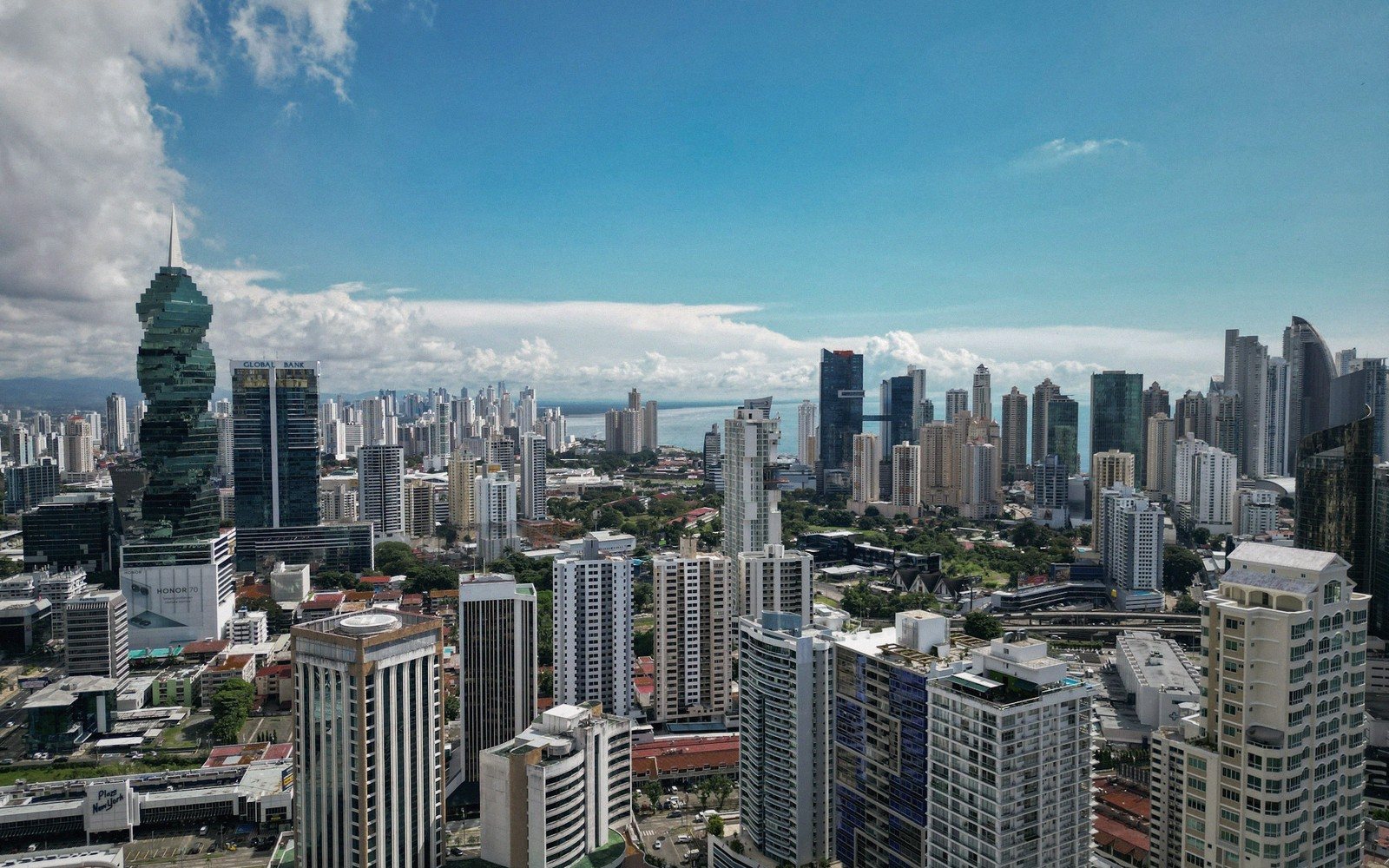
The Headline Problem
Central America reaches the outside world in a handful of stock images: migrant caravans heading north, gang members photographed with tattooed torsos, a president consolidating power in ways that alarm Washington. Those images are not false — El Salvador's mass incarceration drive, Guatemala's grinding battle between reformist prosecutors and a political class that fought back, Honduras's long hangover from institutional crisis, and Nicaragua's full slide into dynastic authoritarianism are all real and consequential. But they are not the whole isthmus.
The region is six republics and Belize, stretching from the Mexico border to the Colombian frontier, with a combined population of around fifty million people. It contains a country — Costa Rica — that abolished its army in 1948 and has since built a democracy stable enough to host international institutions and a tourism economy that rivals any in the tropics. It contains Panama, whose canal-fed economy operates at a different altitude of income and complexity from its neighbors. And even inside the Northern Triangle — Guatemala, Honduras, El Salvador — forces are at work that simple crisis narratives miss entirely.
What the Numbers Actually Say
Central America's economies have, for the most part, grown. The isthmus is not wealthy, and inequality remains deeply entrenched, but the aggregate picture over the past two decades is one of incremental gains in income, electrification, and access to mobile connectivity that would have looked optimistic to a planner in the 1990s. Remittances have become the load-bearing column of household welfare across the region — in Honduras and El Salvador they represent a share of GDP that dwarfs most government social programs, a parallel welfare system built not by states but by emigrants wiring money home every month.
The agricultural base — coffee, sugar, palm oil, bananas — has survived repeated commodity cycles, and several countries have added manufacturing, particularly apparel and, more recently, medical device assembly, to their export mix. The latter sector, concentrated partly in Costa Rica, supplies components to global healthcare supply chains. It is not glamorous, but it is a genuine structural shift toward higher-value production.
Tourism is another story that sits awkwardly against the security headlines. Costa Rica and Panama handle visitor numbers that require real infrastructure. Even Guatemala, with its complicated security picture, draws hundreds of thousands of visitors annually to Antigua, Lake Atitlán and the Mayan sites of Petén. These are not trivial flows.
Where the Contradictions Bite
None of this erases what is genuinely broken. The inequality that persists is not just statistical: it is embodied in the ladino-indigenous divide in Guatemala, where Mayan communities carry a disproportionate share of poverty and where land tenure remains contested across generations. In Honduras, the structural power of economic elites who survived every political cycle largely intact continues to shape what reforms are possible and who pays when they are not.
El Salvador is the region's most contested case study right now. President Nayib Bukele's security crackdown has driven homicide rates to historic lows by a measurable margin — that is a fact — and it has also involved the mass detention of tens of thousands of people under emergency powers that suspended basic due-process guarantees. Both things are true simultaneously, and analysts who want only one of them are not describing the country accurately. The security populism on display there has found admirers elsewhere on the isthmus, which is reason enough to watch what the model's long-term costs turn out to be.
Nicaragua is in a different category: not a country in political difficulty but one where the Ortega-Murillo government has dismantled the institutions of democratic contest so thoroughly that the questions are now about what a post-Ortega transition could even look like, and whether the diaspora created by the repression carries enough political energy to matter when the moment comes.
Guatemala, meanwhile, delivered something the region had not seen in years: a presidential election in 2023 that brought Bernardo Arévalo of the Semilla movement to office against the explicit resistance of a public prosecutor's office that moved to annul results and arrest allies of the president-elect. Arévalo took office in January 2024 after months of sustained popular protest and international pressure. The courts held — barely. Whether what held is a democratic norm or a one-off is a question Guatemalans are still living through, and the answer matters well beyond Guatemala's borders.
- 1948Costa Rica abolishes its military under President José Figueres
- 2021–ongoingNicaragua's Ortega government dismantles democratic institutions, exiles opponents
- 2023Guatemala's presidential election; Semilla's Arévalo wins amid attempts to annul result
- January 2024Arévalo takes office after months of civic resistance and international pressure
Reading the Isthmus Whole
The region's variety is, in itself, a kind of analytical instruction. Any frame broad enough to cover Nicaragua and Costa Rica simultaneously — authoritarian consolidation and stable democracy, a few hundred kilometers apart — is probably too broad to be useful. What Central America rewards instead is granular attention: to which institutions are holding, which social contracts are being renegotiated, which forms of mobility (geographic, economic, political) are actually open to ordinary people.
The great northward migration is real, and the pressures behind it are real. But the isthmus is not simply a region people leave. It is also a place where things are being built, contested, and — occasionally, against the odds — defended. That quieter story takes more patience to follow than a caravan photograph. It is also the one that will determine what Central America looks like a generation from now.